

Lost a bird? Found a bird?
Call (907) 351-2762
Navigation
Calendar
Educational Meeting
(Zoom)7-9PM
Board Meeting, 5-7PM (Zoom)
Educational Meeting
7-9PM (Zoom)
Board Meeting, 5-7PM (Zoom)
Educational Meeting
7-9PM (In-person and Zoom)
Board Meeting, 5-7PM (Zoom)
Educational Meeting
7-9PM (Zoom)
Board Meeting, 5-7PM (Zoom)
Educational Meeting
7-9PM (Zoom)
(estimated) "Reading Rendezvous" on the Loussac Library lawn 12-4pm
Board Meeting, 5-7PM (Zoom)
NO EDUCATIONAL MEETING UNTIL AUGUST 4
Board Meeting, 5-7PM (Zoom)
NO EDUCATIONAL MEETING UNTIL AUGUST 4
Board Meeting, 5-7PM
Educational Meeting
7-9PM
Board Meeting, 5-7PM (Zoom)
Educational Meeting
7-9PM (In-person and Zoom)
Board Meeting, 5-7PM (Zoom)
Educational Meeting
7-9PM (Zoom)
Board Meeting, 5-7PM (Zoom)
Educational Meeting
7-9PM (Zoom)
Board Meeting, 5-7PM (Zoom)
Holiday Potluck AND Board Elections
(In-person and Zoom)
Board Meeting, 5-7PM (Zoom)
Bird Care: Housing
General Information •
Veterinarians •
Health and Safety
Housing •
Nutrition •
Activity •
Downloads
|
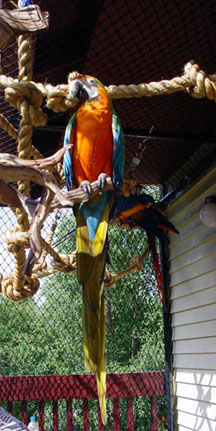
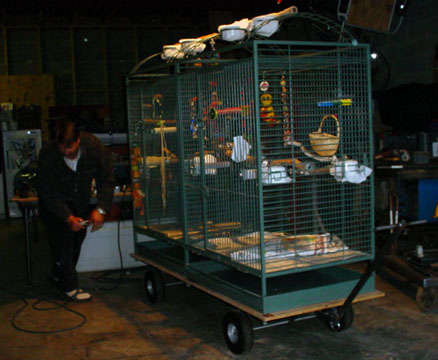
The number one housing consideration is that the size of the cage should match the size of the bird. Make sure the bar spacing of the cage is right for your bird. The bird should not be able to stick its head through the bars! Also, try to avoid galvanized wire on cages. This can cause zinc poisoning if your bird were to ingest some of the zinc coating. Additionally, your bird should be able to open its wings to turn around and not touch the cage on either side. Because birds don't hover when they fly, a cage that is wider than it is tall is a better choice because it gives the bird the best chance to fly in its cage. Most cage manufacturers make cages to fit the needs of the owner, not the bird. With larger birds, making a horizontal cage fit into an apartment setting may present a challenge. This is when it becomes the owner's responsibility to exercise the bird out of the cage. Remember: birds were meant to fly, not sit on a perch all day. Once you know the proper bar spacing and sizing requirement for your bird, find the largest cage you can afford. Also, determine if the cage uses special screws, clips or fasteners to hold itself together and then consider whether your bird is likely to easily undo the screws, clips or fasteners as many species are prone to do. Check the cage for safety features and/or concerns, especially whether or not it will be easy to clean. Bird Talk magazine is a great resource for looking at pictures of various cages. Small to Medium birds (finches, lovebirds, etc): Conures and Pionus: Birds with LONG tails: Cockatoos, Amazons and African Greys: Macaws:
Playtop cages
Outdoor housing
|
||
|
The Alaska Bird Club • P.O. Box 101825 • Anchorage AK 99510 |
